


Church productions
One team for your church's audio, light, and broadcast — even to Radio Dei
A technical production office for churches: sound, lighting, and live broadcasts to Radio Dei — planned and run by one team, quietly enough to still feel like a service.
Full scope
Everything a service needs to be heard, seen, and carried further.
A confirmation, an ordination, an anniversary, a festival service broadcast to Radio Dei — each one usually means booking a sound engineer, a lighting person, and a broadcast crew separately, and hoping they coordinate. We plan and run all of it as one production, and act as your church's own technical production office for the day.
01
Planning
A survey of the building and the order of service before anything is booked: what the space allows, where the congregation sits, and a schedule built around the parish's own calendar, not a standard event rider.
02
Electrical
Load worked out against the wiring a church actually has — often original to the building — so nothing trips during the sermon or the hymn.
03
Lighting
Discreet, floor-based rigs that read as a well-lit service, not a stage show — positioned to avoid drilling, damaging historic surfaces, or drawing attention to themselves.
04
Audio
Reinforcement and mixes tuned for choir, organ, and spoken word in a room built for neither — intelligible from the back pew, without a wall of speakers up front.
05
Outdoor broadcast
A live feed to Radio Dei or another broadcaster, or a clean recording, sent out over AirCore OB1 — no satellite truck, no crew standing in the aisle.
06
On the day
One point of contact running sound, light, and broadcast together, so the parish coordinates with a single team instead of three separate vendors.
Why us
It still has to feel like a service.
Churches are usually protective of their space and cautious about anything that looks like a production crew taking over — with good reason. The building may be historic, the congregation doesn't want to feel like an audience, and the service still has to be a service, not a broadcast with a service happening inside it.
"It still needs to feel like a service, not a broadcast."
That’s the brief on most church jobs, whether it’s said out loud or not. The technical work has to stay out of the way: lighting that doesn’t look like a rig, microphones that don’t dominate the altar, a broadcast signal that leaves without a truck parked outside.
It’s also why we don’t send separate audio, lighting, and broadcast vendors to figure it out among themselves on the day. One team plans the sound, the light, and the outdoor broadcast together, around the building and the order of service, so the church gets one point of contact instead of three unfamiliar crews.
We’ve done this for a 300-year-old protected interior with paintings that couldn’t be touched, live sound for a choir and a bishop in the same afternoon, and a broadcast to Radio Dei that left the service undisturbed. That’s the standard we bring to a parish hall, a cathedral, or a churchyard service just the same.
A space that can't be modified
Ground-supported lighting and audio, no rigging or drilling, for buildings — historic or not — where nothing gets fixed to the walls or ceiling.
A service, not a stage production
Discreet mic placement and lighting built to disappear into the room, so the congregation experiences a service, not a production.
One point of contact
A single technical production office for audio, light, and broadcast, so the parish plans with one team instead of coordinating separate vendors itself.
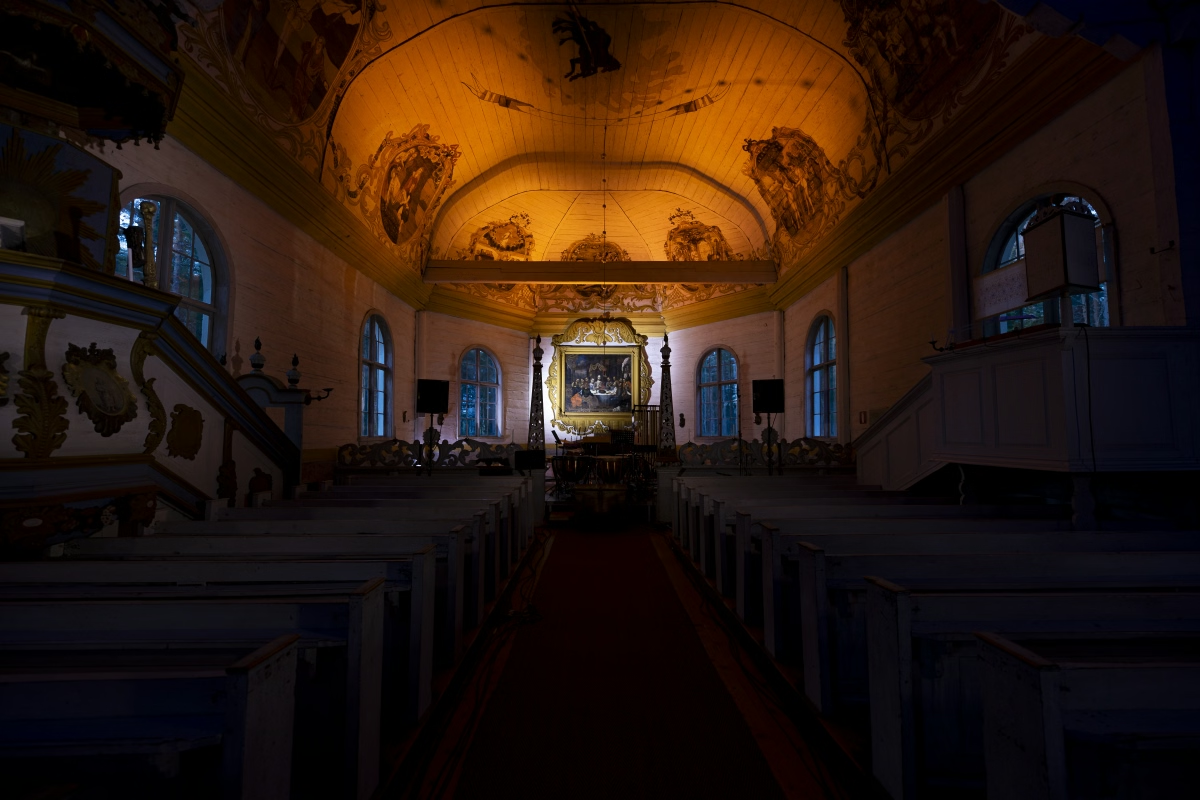
Paltaniemen kuvakirkko — August 2026
Proof, not a promise
Paltaniemen kuvakirkko, live to Radio Dei
A 36-fixture lighting rig on a protected 1700s interior, sound for a cantata and a festival service that needed almost opposite treatment, and a live broadcast of the service to Radio Dei — run as one production, without a single new hole in three centuries of paintwork.
Read the full case studyPlanning a service, ordination, or anniversary that needs to be heard beyond the room?
Tell us the building, the order of service, and who else needs to see or hear it — including whether it's going out to Radio Dei. We'll tell you what's possible, and what it takes to do it quietly.