


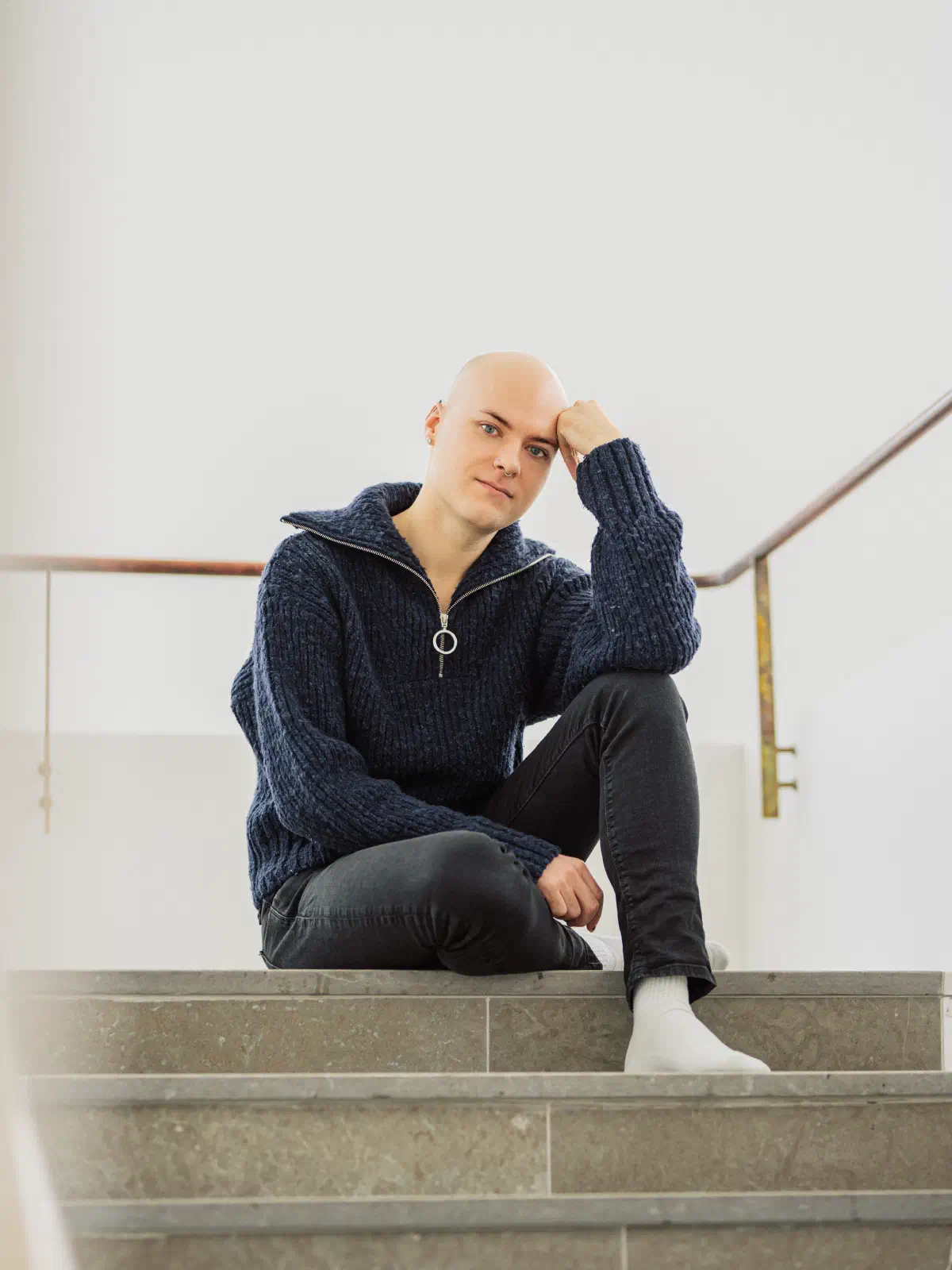
Mika Säppi

Hi, I’m Mika. I lead the technology unit for audio operations — and solve problems that may not exist yet.
My work sits at the intersection of predictability and creativity: building solutions that are reliable by design, and communication systems that hold up when everything else doesn’t. I care about innovations that are honest about what they do and why — you won’t get anything from me that works by accident.
The best ideas tend to surface in unexpected places. Turning them into something real takes a community of people who know how to recognise a good one.
Half a million reasons
It’s worth remembering, amid all the technology, that we work for the people who consume our content.
When a radio show host didn’t know how to use the equipment, the easy dismissal was: “we’re doing this for ourselves.” At the time, I was working at the Finnish Broadcasting Company. The programme had about half a million listeners.
What fascinates me most about technology is not so much how things are done, but why.
Technology shouldn’t dictate what we do or how we do it. It should act as an extension of your thinking — like a trusted colleague who understands what you need before you have to say it. Technology exists to support content, its creators, and its audience. At its core, it’s about creating a connection between the person making something and the person receiving it.
During my time at YLE, I was also involved in designing, developing, and testing satellite communication systems intended for crisis communications between the state and the public. One of the key objectives was simple: could a person with no technical background successfully operate the equipment under pressure?
We tested it a few metres from the Russian border, at a Finnish-Russian border crossing station.
In that same environment — not exactly brimming with creative energy — I had the idea for a fully autonomous radio automation platform. The initial goal was to prove that seemingly impossible things are entirely possible, even with open-source tools. The central question became: why hire people for work a computer can do faster and more reliably? That question became A26, the core of the AirCore product lineup. A26 lets media organisations focus on making content instead of spending time on manual, non-productive work.
Once A26 was running, I turned to another stubborn problem: outside broadcasts are expensive, logistically painful, and — honestly — the audience rarely cares whether the show is live from a rooftop or pre-recorded in a corridor. Since OB will exist until the heat death of the universe, I decided to tackle the two real issues: cost and logistics. That thinking produced OB1, which went into deployment the day after the virtual audio mixer was finished. It does everything an outside broadcast van does, at a fraction of the cost, and even the on-air talent can figure it out.
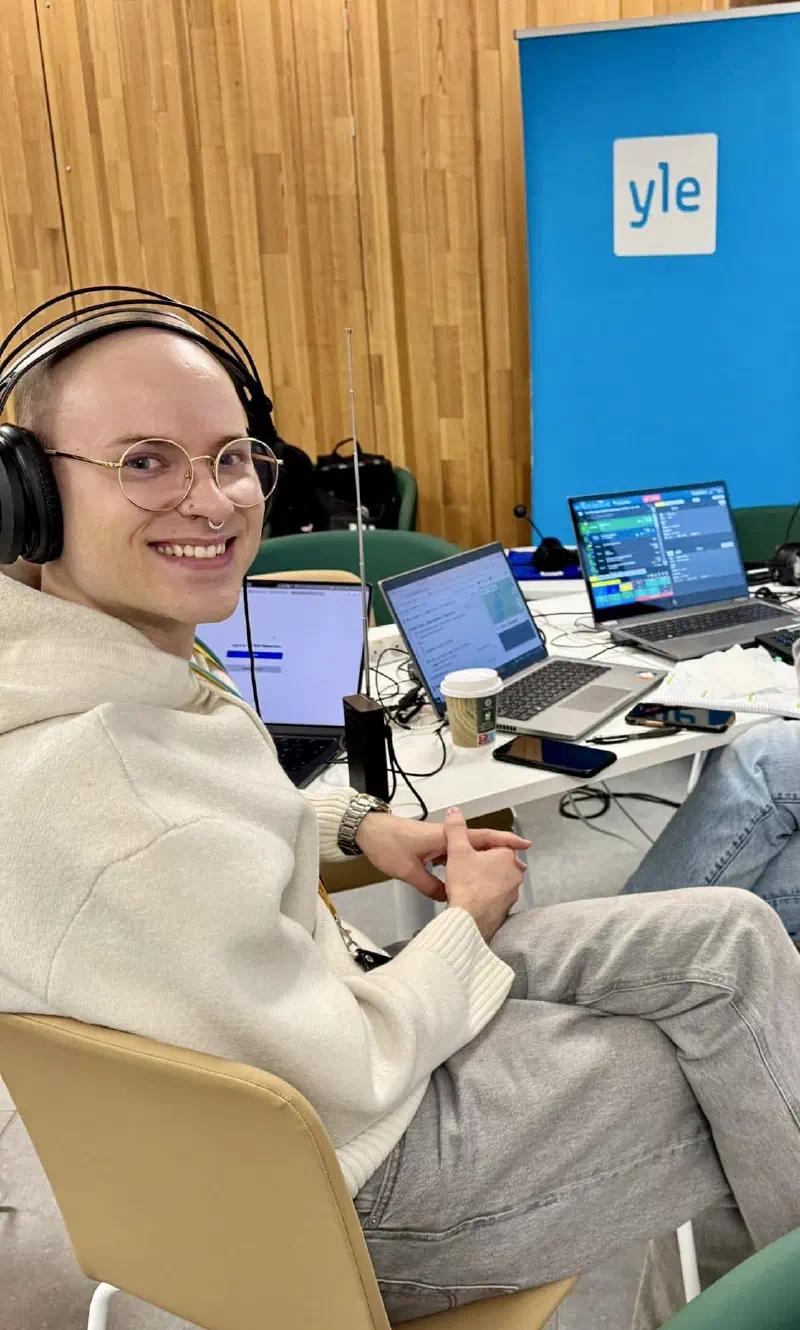
I’m an avid user of AI tools in my daily work — and increasingly, a builder of them. My current focus is Scribbles, a platform designed for broadcast newsrooms where AI and human colleagues work the same story together, in the same room.
My specialist areas include Liquidsoap, broadcast automation, online radio and delivery platforms, Fraunhofer FDK AAC, Opus, HLS, Icecast, Starlink and other satellite systems in crisis scenarios, and Dante (Level 3 Certificate). I’m the inventor of ABA.
I’ve completed selected courses at Berklee, specialising in audio production, acoustics, and the physics and mathematics of audio. Occasionally I cross over to the creative side, leading the Hevimessu special ensemble.
On top of all of the above, I have a remarkably refined taste in coffee. Right now I’m pulling shots from Lehmus Roastery’s Lauritsala in my espresso machine. Use ROCKNROLLNEVERDIES at checkout for 15% off.
Memory
A successful technical solution, to me, is not one where you spend a lot of money on impressive equipment just because your neighbour has one — or a slightly older model. Success is when you’re not spending your working hours desperately trying to get things to work. Successful solutions aren’t necessarily even remarkable.
Here’s an example. At one media house, there was a recurring problem where double-mono audio would go to air with a 180° phase difference between the channels. This was reliably followed by a panicked call from the studio: the presenter was convinced everything had broken, because the off-air monitor had gone silent. The monitor was summing L+R — so phase-cancelled audio reads as silence, which, by any reasonable interpretation, looks exactly like a dead feed.
For anyone listening on a mono receiver, the broadcast actually did go silent for a few minutes. Not ideal.
I sat with this problem longer than I should have, and eventually concluded there had to be a fix that didn’t require me to be on call indefinitely. I wrote a simple JavaScript widget that ran in the browser: it summed consecutive samples, and if the result was negative, it multiplied one channel by −1. A later version used a proper cross-correlation formula — someone had worked out how to make sufficiently broken audio slip past the original logic, which I suppose is a kind of compliment.
The code was a stone rolling downhill: not elegant by any measure, but it kept ending up at the bottom. That was enough. I no longer had to sit with my finger hovering over the ø button, and the phone stopped ringing.
The success of an innovation should be measured by the quality of the problem it solves, not the sophistication of how it solves it. Someone, somewhere, decided the world needed a microwave oven that beeps continuously until you remove the food. Thoughtful, in theory — but I don’t think there are many people who genuinely forget they put something in the microwave. And if they did, they probably weren’t that hungry to begin with.