


Research
Risks of non-unified communication systems during emergencies
What risks volunteer-based crisis communication networks pose in state emergencies?
During the past five years, an interest in a private, volunteer-based crisis communication network has risen notably. This network, called “community radio,” is based on the idea that during a state of emergency it’s unlikely that the ordinary ways of communication will suffice due to service denial, such as failed infrastructure or service overload. In this article, we analyze the strengths and weaknesses of such methods of communication.
What community radio claims to be
The project positions itself as an alternative communication method replacing ordinary ways of communication. The project especially underlines its crisis resiliency. The project’s relevancy heavily relies on mobile networks failing due to a power outage. Another view the project mentions is that during crises, “individuals can’t contact the authorities”.
Claim 1: “3-hour power outage, mobile network is down”
This claim presents the worst-case scenario. As previously learned, even the most de-prioritized base stations must have a back-up power supply that is sufficient for at least three hours of use. If a house happens to have fixed network connectivity, such as from an optical fibre, and has power, VoIP calls would still work perfectly.

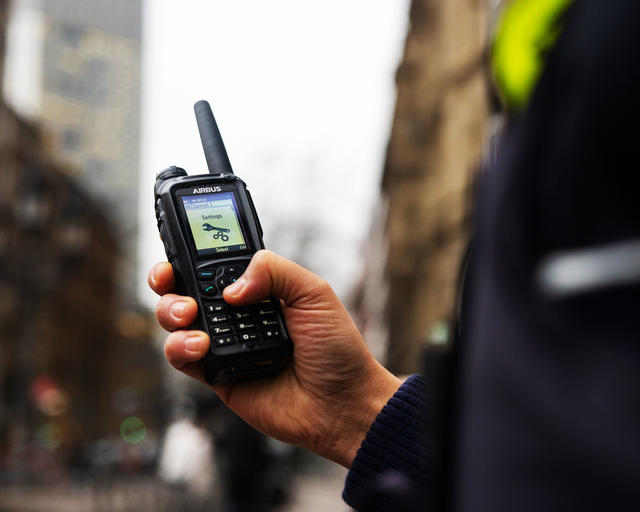
Claim 1.1: “During the outage, VIRVE (official TETRA) wouldn’t work”
This claim is largely false. VIRVE base stations are equipped with fixed backup power at key sites, and the company responsible for this network maintains a large fleet of mobile generators for power failures. VIRVE stations are usually equipped with a 6-hour battery backup, meaning after grid failure, VIRVE will work for at least six hours. The company behind VIRVE confirms that planned two-hour power outages have zero effect on VIRVE communication services.
However, since Finnish authorities are slowly moving from TETRA to Virve2, which uses commercial prioritized mobile networks, future reliability is unknown as of 2026. Since the mobile base stations would become part of a prioritized network of base stations, their backup power capacity has to be increased.
Claim 1.2: “During a blackout, community radio will work”
It won’t, unless the network has similar back-up plans that the commercial networks have. It’s worth noting that the community radio requires electricity to work, and self-made communications do not have mandated backup power requirements.
Claim 2: “Village relay works up to 120 kilometers”
While technically achievable, it’s not as routine as presented. 70 MHz at 25 W benefits from favorable ground-wave and troposcatter when compared to higher VHF/UHF. The 66-88 MHz band shares propagation characteristics between VHF and UHF, but claiming that 120 kilometers is achievable in every scenario is false. Typical reliable simplex for said transmitter is closer to 30-60 kilometers in Finnish forest terrain. 120 kilometers can be achieved only by using elevated sites, clear line of sight, favorable propagation and tuned antennae.
In practice, community radio can effectively cover distances of 120 kilometers or more by utilizing other users located at the boundaries of two network coverage areas to relay messages to other receivers.
Claim 3: “Community radio allows communication between local individuals when the cellular network is congested”
This claim mixes up some concepts. First: a network serving a village will only get congested by the villagers’ own use. Networks are planned to have enough capacity to handle peak usage. Assuming the villagers are contacting each other, the network will usually have enough capacity to handle these communications. There would be no need for a back-up network for this scenario, since the network is capable of handling the connections by design.
Technical framework set by laws for service operators
Broadcasters
In Finland, during crises, an individual is instructed to listen to an FM broadcast from the Finnish Broadcasting Company, Yle. Yle is ordered, by law, to “relay official authority announcements as specified by decree, and be prepared to carry out television and radio operations in exceptional circumstances”. Yle is also obliged to relay danger alerts in television and radio programming, and is obliged to make sure the equipment handling the alert transmission is “properly connected and operational”.
In the laws regarding broadcasting and electronic communications, there is a whole chapter focused on preparedness. The laws also order the radio broadcasters to ensure the frequencies are used without faults and that the use is efficient in a state of emergency. Broadcasters are also obliged to plan for crises and must present their preparedness plans to Traficom whenever requested. Any changes to submitted plans must be reported without delay.
The company that maintains the terrestrial broadcast network in Finland, Digita, has coverage in all areas within Finland, except for what’s considered wilderness in the north-east and northern Lapland.
Network components are assigned a priority rating from one through five based on geographical coverage or number of users. This makes sure that links serving a larger geographical area, such as areas in Northern Finland, are not low in priority due to their lack of impact measured purely by the number of users.
Technical regulations
In tiers 1 and 2, the infrastructure must be backed up with stationary generators that turn on automatically, and have a fuel tank capacity, and the fuel contents inside of it, sufficient to run the unit for at least one week. Between the load and the generator sits a conventional UPS or an accumulator, to allow the generator to reach full capacity, which can take a few minutes.
In rural areas, communication infrastructure in tier 3 must be backed up by a power source that’s capable of at least 12 hours of back-up time, if the power supply isn’t secured with a stationary generator. Priority tiers 4 and 5 have requirements of ≥6 and ≥3 hours respectively. If a tier 5 station is a building base station or a 5G link, or if the station can’t be accessed within 2-4 hours, the limits are different.
Infrastructure in tier one is required to be located underground, or if above ground, inside an S1-class steel-concrete structure. Even underground, the infrastructure must have a roof and walls built of steel-reinforced concrete, and must withstand the collapse of the building above. The spaces must also have no windows, and must be equipped with backed-up water pumps if there is a possibility of water coming into the structure. For context, these specifications are identical to the structural requirements of bomb shelters in Finland.
It’s safe to say that the infrastructure is well-protected against most external threats, as well as natural disasters.

Risks related to relying on unregulated communications during crises
Coordination
RHA68 channels are free to use for anyone with a transmitter, and are largely uncoordinated. PMR446 is even more exposed. It’s possible to overcrowd the PMR446 frequencies and experience service availability restrictions, especially during peak demand. During an actual crisis, there’s no method of coordinating who gets to use what frequencies, and who gets to speak when. Real emergencies are not prioritized in this network.
These frequencies, as with any unencrypted simplex FM frequencies, can also be disturbed with minimum effort using freely available gear, resulting in denial of service.
Range
PMR446 is listed as the last-hop device. These radios are typically used for communication within the same building or during line-of-sight outdoor activities. Range in these devices varies from a few hundred meters to a few kilometers in perfect conditions. As the PMR446 has a maximum output of 0.5 W, the typical maximum range is approximately three kilometers.
In the project’s suggested network topology, PMR446 works only if the end-user is within a few thousand meters from the nearest house that has an RHA68 transmitter and a PMR446 receiver. The range alone leaves most of the rural area without service — precisely the area the community radio was designed to keep in touch with the outside world.
Lack of convention
In a perfect world — a village where every house would be within a few kilometers of each other, and at least one house had an RHA68 transceiver — the community radio could work in keeping the village connected to the outside world, assuming someone in the outside world also happened to be listening on the frequency the village is communicating on. However, since the whole network is uncoordinated and there’s no calling convention, it’s by no means guaranteed anyone’s actually listening.
No connection to authorities — by design
The Finnish authorities have decided that the community radio is not connected to any of the official networks. Also, the authorities decide what information is shared with the community radio network.
This alone makes using the radio very questionable during crises, and even if the authorities decided to share information with the community radio, it would still be one-directional and always behind official broadcast channels, since relevant information is always broadcast to the masses on the FM frequencies first.
Single point of failure
The base station is a critical single point of failure. Unlike other networks, these stations have no mandatory backup power, no mandatory servicing or maintenance, and no mandatory training. The community radio is based on volunteers’ goodwill, and the functionality is not audited by any authority.
Geographical restrictions
Five of the channels available for consumers may not be used within ten kilometers of any Finnish state border. If the antenna is higher than five meters above the ground, these channels shall not be used within 40 kilometers of the state borders. This eliminates a notable portion of the areas where the system is promoted as most useful.
Issues in the value proposition
Some community radio individuals pose this project as an all-solving backup solution for any official networks. What they fail to see is that a functional, reliable network is more than a network of locally connected short-range devices. Every piece of commercial electronic communication infrastructure is regulated by law. The regulations control a vast range of variables, such as power, back-up power fuel tank size, cooling, back-up cooling, routing and site access.
One specific project argues that “the officials do not have a backup network.” This is false. TETRA networks and all commercial networks in tiers one and two are required to have redundant networking paths, networking equipment and processing equipment. Even the equipment location in a single building is regulated: the redundant paths may not co-exist in the same fire compartment.
TETRA networks route connections from the end device to a unified infrastructure point, which then relays the message to a speech group and broadcasts it to all members scanning that group. The only scenario where peer-to-peer communications would be used would be deprioritized, local, LOS communications.
A power outage is also posed as a win for the community radios: “when there’s a blackout, cellular connections will fail.” This is false: as we know, cellular networks are regulated and do have sufficient backup power for anywhere from three hours to weeks of operation, as mandated by law. Community radios have none of these risk-mitigating measures, at least not mandated by law. When the power goes out, even if the device has some battery, it will go out before the actual infrastructure dies.
How the emergency calls work in the EU
Individuals in the EU can contact 112 (911/000 equivalent) anywhere there is GSM coverage, without a paid plan or a SIM card. This is mandatory across the entire EU. Calls to 112 are also prioritized in the network, meaning if all four of your neighbors were on the phone using a link that can only support four calls, one of them would be dropped if you decided to call 112. The only scenario where you couldn’t contact the emergency services would be when ALL of the service providers can’t offer the service (GSM) anymore, which is very unlikely. And if such a scenario occurred, the whole village would have been without power for days, and the authorities, or at least the grid operator, would most likely be aware of that.
Specific risks in the community radio
None of the mentioned regulations are present, technically possible or financially viable in self-made, volunteer-based community radios. These networks also bring in a few issues the official networks don’t have by design: man in the middle and eavesdropping.
The community radio relies on one single mid-range transceiver in the village, which means the whole network loses contact to and from the outside world as soon as the person taking care of that device is unable to do so. If the community radio were serving an area that has political motives, it would be as easy as replacing one operator to change what information goes to and from the outside world.
If the community radio broadcasts something that couldn’t be posted on the Internet, the users risk an information leak. In crisis situations, there can be certain actors who benefit from leaked information, even if it is seemingly irrelevant for public safety.
Risks involved in non-unified crisis communication methods
If the community radio is promoted as a “replacement for critical communications,” there’s a notable risk that a part of the population will believe that they get all of the relevant information by listening to only the community radio. This would mean that in a crisis situation, when authorities eventually broadcast, a user could miss it, simply because they’re relying on their community radio to provide all the necessary information.
The psychological dimension: security theater and risk compensation
Beyond the technical shortcomings, the community radio presents a psychological risk that may be harder to quantify but equally consequential.
Security theater is the practice of implementing security measures that provide the feeling of improved security while doing little or nothing to achieve it. The term originally came up in the context of airport screening, but the psychological effects of security theater can serve a useful purpose by calming public anxiety. However, this false sense of security can backfire and lead to a false sense of safety, reduced vigilance and increased vulnerability to threats.
This is precisely the risk that the community radio creates at scale. A villager who has participated in a community radio training day, helped install an antenna, and tested the equipment on a Sunday afternoon has a legitimate sense of having done something. The problem is that what they have done may not correspond to what they believe they have done. Every precaution is also a communication: it tells people that they’re safer than they were previously, and thus implies that alternative precautions may be superfluous. In this case, the implied superfluous precaution is the one that actually works: keeping a battery-powered FM radio charged, understanding how 112 functions without a SIM card, and knowing that the mobile network has mandatory backup power.
This connects to a well-documented phenomenon in disaster preparedness research. Risk compensation describes how people’s perceived need for preparedness is proportional to their beliefs about the degree to which the environment can pose threats to them. Becoming aware that civic agencies are taking steps to mitigate risk lessens the degree to which people perceive the environment as threatening. Applied to community radio: a person who believes they have a functional crisis communication system in place will rationally invest less attention in understanding how the official systems actually work. The community radio doesn’t just fail to solve the problem. It actively displaces the behaviors that would.
Improving skills through advanced courses has not been found to lead to greater safety. This is attributed to the fact that such courses enhance confidence, with confidence growing faster than skill. The result is overconfidence, and thus a reduced level of perceived risk. The parallel in community radio is direct: participation in training exercises builds confidence in the system without necessarily building an accurate understanding of its limitations.
How the community radio could become a part of the preparedness
First, it’s relevant to note that there are two different problems the community radio wants to solve:
- individuals can’t contact the authorities during crises with the existing infrastructure, and must use the community radio, instead of existing methods, to do so
- individuals can’t contact each other if the cellular network fails
The first issue would require structural changes in how the authorities work during crises. Due to the nature of the community radio topology, someone would have to sit on the receiving end, filter out unnecessary information, and manually relay relevant information to the authorities. This is an issue likely not relevant enough to get a person allocated to it.
If the community radio became part of a larger network, and the authorities proxied messages to that channel, the authorities would have to be able to trust that the receiving end is also functional. This would mean every community radio mid-range transceiver would have to be regulated as at least tier 5 network equipment, and that someone would be listening to the transceiver at all times. This would quickly become financially unviable.
As said before, the project’s requirement that the community radio “must be allowed to contact authorities” is problematic. Due to how the emergency calls work across the EU, you’re more likely to get a hold of the emergency services through cellular than through a best-effort community radio.
Then, when it comes to individuals being able to contact each other during a state of emergency, that’s a valid point, and the community radio is just great for that. This, however, is not highly relevant for the purposes of state preparedness.
What the community radio is good for
There’s no point in saying the community radio is good for nothing. It does serve a good purpose: if Facebook dies, you can still reach out to your neighbors to check if they’re fine. The community radio is a legitimate hobby with real community value — just as amateur radio has been for over a century. The issue arises not from the hobby itself, but from the gap between what the users believe the system can do in a real emergency and what it actually can.
Where it goes wrong is when it’s proposed as an all-solving solution for communications during crises. There are already methods for communicating during a state of emergency, which are regulated, maintained, monitored, and staffed by trained personnel.
Read more
Act on Electronic Communications Services